Press & media.
Twenty-five years in cinema, streaming, development, production and the business of stories — distilled into five books about what stories do after someone believes them. Everything a journalist, host or editor needs, in one place.
Author profile
Sidharth Jain, an MBA in Finance, has spent twenty-five years working across film, television, streaming, development and the business of storytelling. Across that period he has developed more than 150 stories and 50+ screenplays, worked with 100+ screenwriters and 300+ authors, and represented more than 500 books for screen adaptation.
His career spans early internet entrepreneurship, studio development, independent production, streaming, book-to-screen IP and film finance. His producing credits include Marigold (2007), Ragini MMS (2011) and Netflix's Trial by Fire (2023), which won the Filmfare OTT Award for Best Series — Critics. He was part of Hotstar's early team across original content, licensing and acquisitions, and founded The Story Ink in 2018 to build a bridge between books and the screen.
Today his work continues across content, IP, production and capital through ventures including The Story Ink and Filmoney Global. The five-book collection marks his 25th year in the storytelling and film business.
The five books — press angles
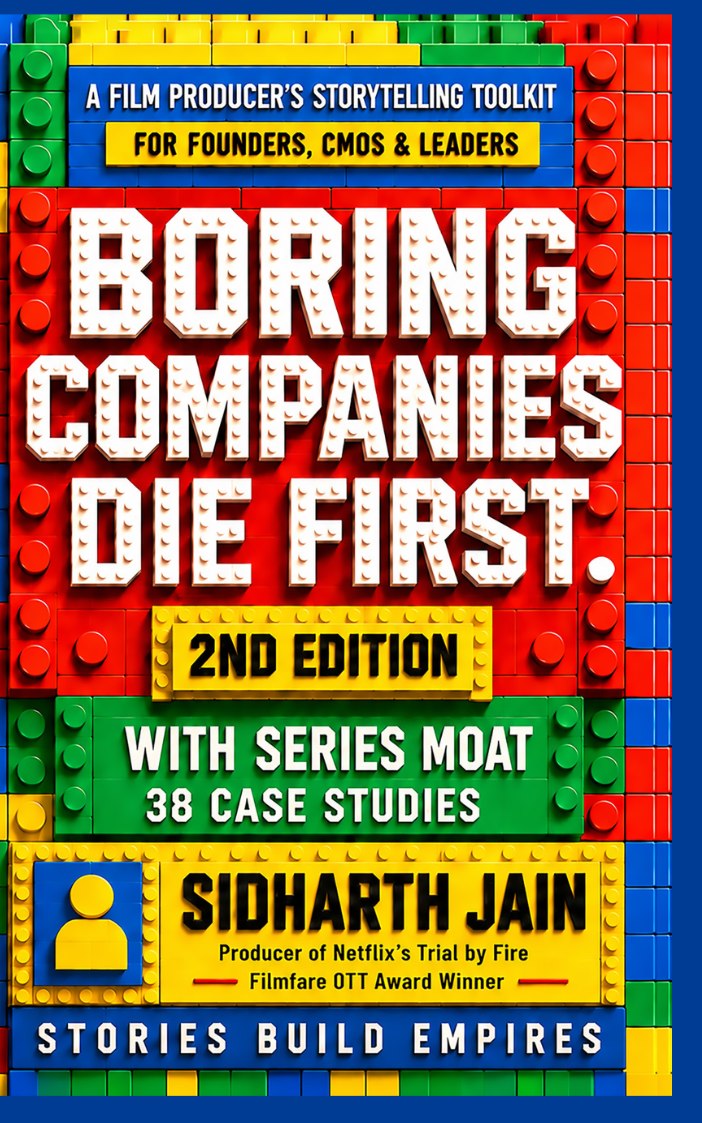
Takes the tools of cinema — protagonist, conflict, stakes, transformation and narrative structure — and applies them to founders, brands, fundraising and leadership. Products and even conventional competitive advantages can be replicated; the story a market chooses to believe about a company is much harder to clone. The second edition extends the argument into AI-generated communication and serial storytelling.
- Make the customer the protagonist; the company works best as guide, tool or catalyst.
- Open any important room with Stakes · Obstacle · Why Now.
- A story only compounds if the operating reality beneath it can carry the weight of belief.
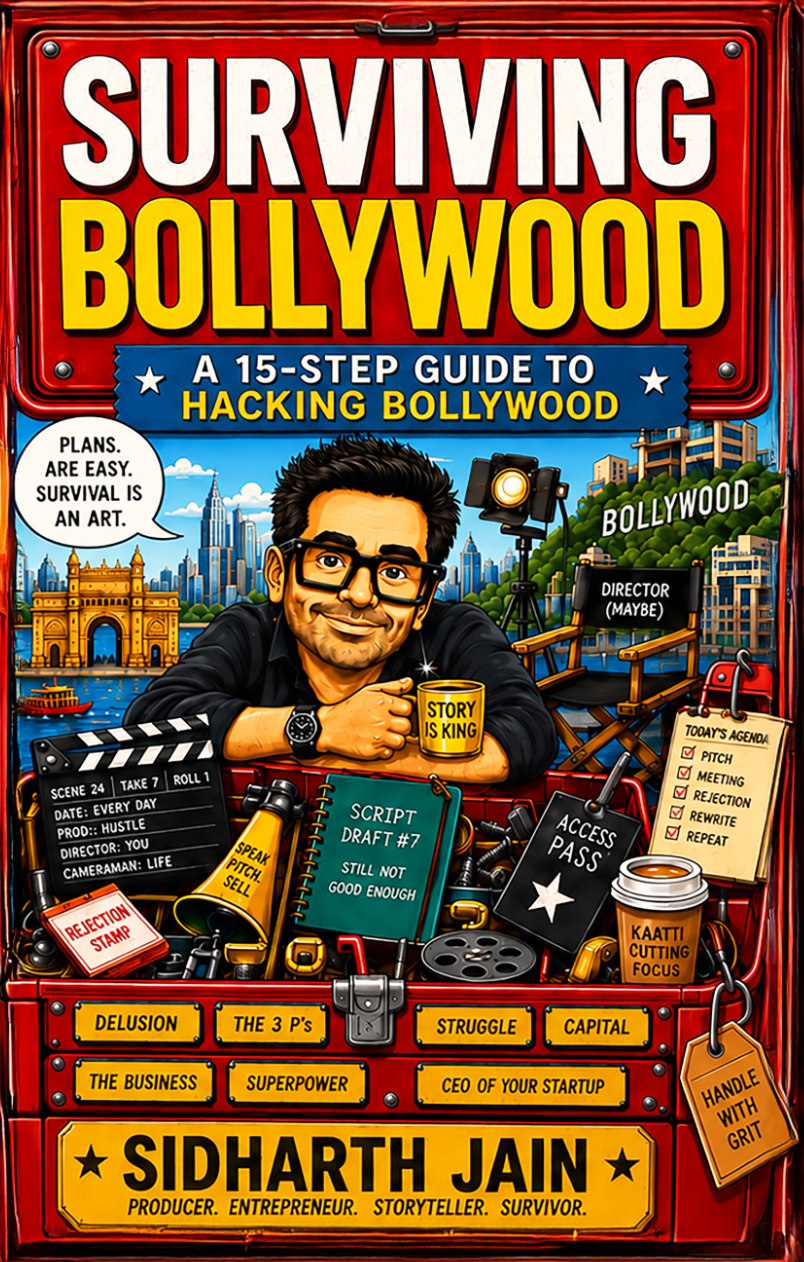
Twenty-five years of film-industry experience distilled into a survival manual — deliberately not a filmmaking textbook, celebrity memoir or fame guide. It focuses on the unglamorous skills that create long careers: dependability, usefulness, patience, persistence, reputation, relationships, runway, business literacy, self-marketing and reinvention.
- Talent is abundant; dependability and behaviour build the hidden résumé that travels ahead of you.
- The invisible years can become struggle capital: skill, relationships, reputation and resilience.
- Treat a creative career like a company — with runway, operations, marketing and the willingness to reinvent.
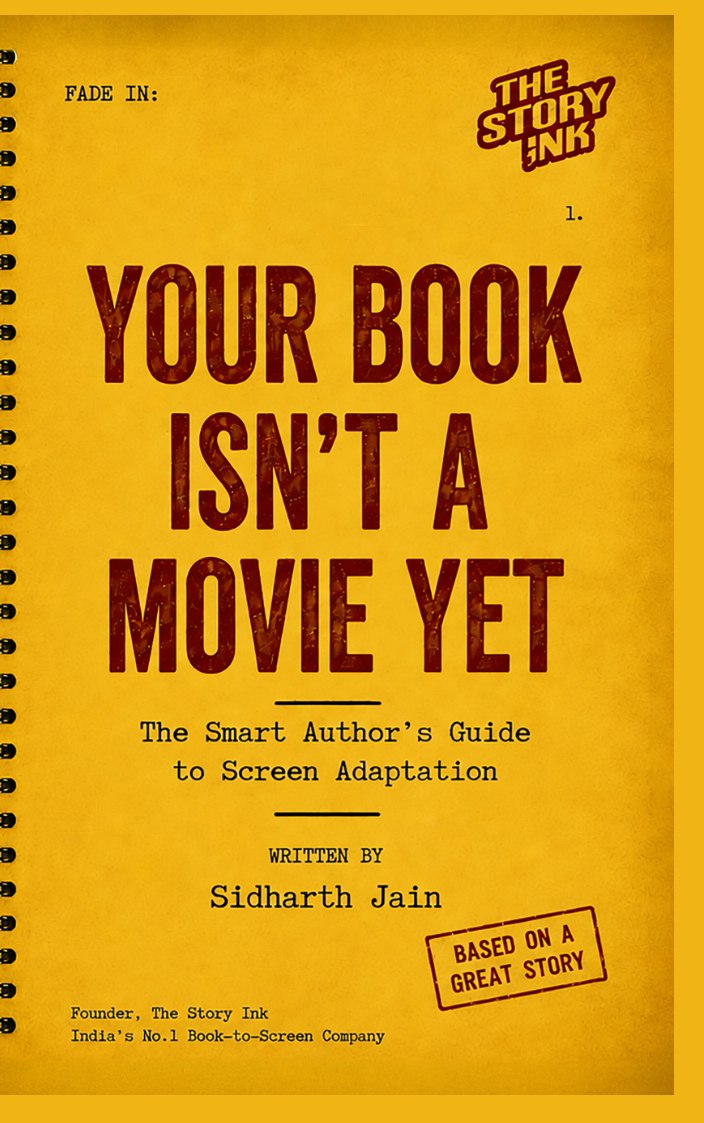
A professional readiness manual for authors who want to understand how the screen business actually evaluates books. It separates literary quality from screen adaptability, then shows how to diagnose format, identify the first audience, clarify rights, build a professional package and enter the market with realistic expectations.
- Diagnose what is visible, what keeps moving and who will care before pitching.
- Choose the right native form: film, series, television, microdrama, documentary, audio or animation.
- The option is not the finish line — packaging, timing, collaboration and durability decide what survives.
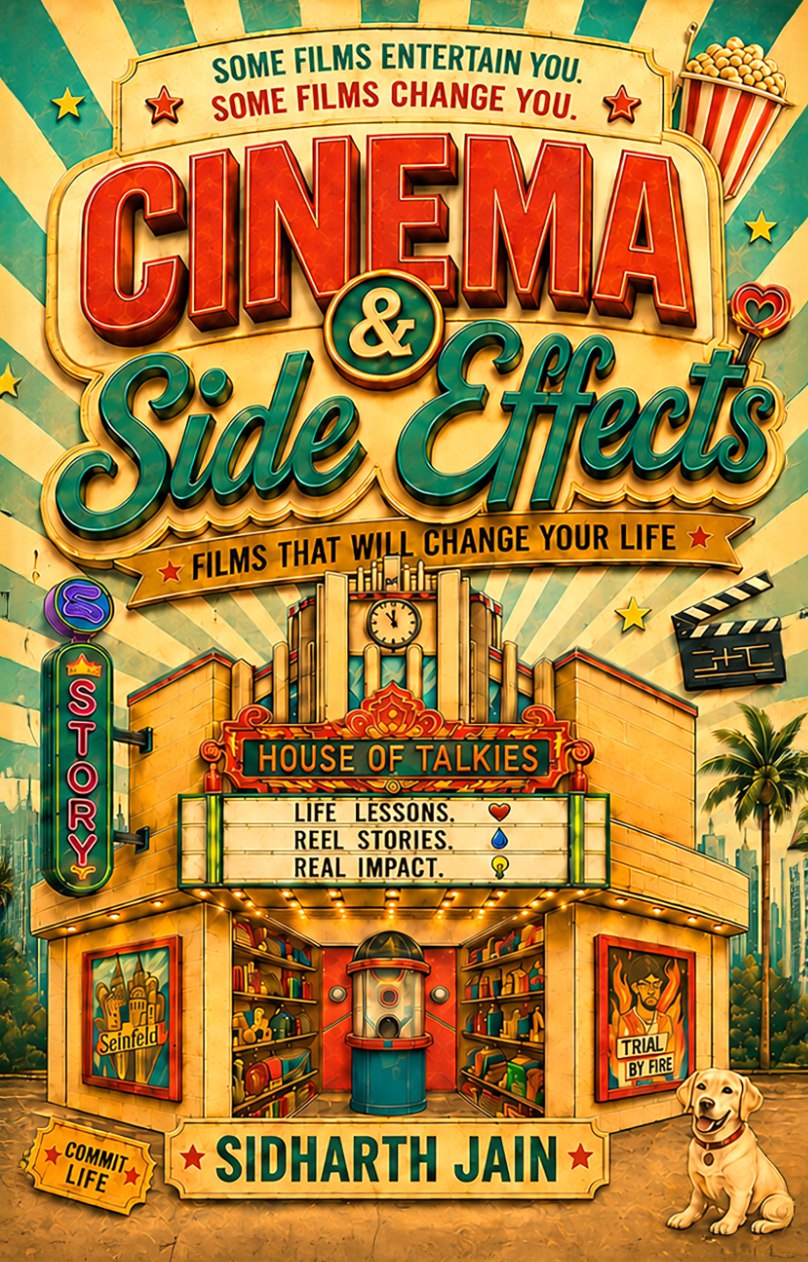
A personal cultural book about cinema as unofficial emotional education. Rather than ranking films, it asks what movies quietly teach us about identity, love, grief, class, fear and endings — moving across Bollywood, Hollywood, Japanese, Korean and world cinema, and the residue films leave behind.
- Films become part of the emotional vocabulary through which audiences understand life.
- Cinema's warnings are often consumed as aspirations — especially around masculinity, power and ambition.
- Rewatching matters because the film stays fixed while the viewer accumulates a life.
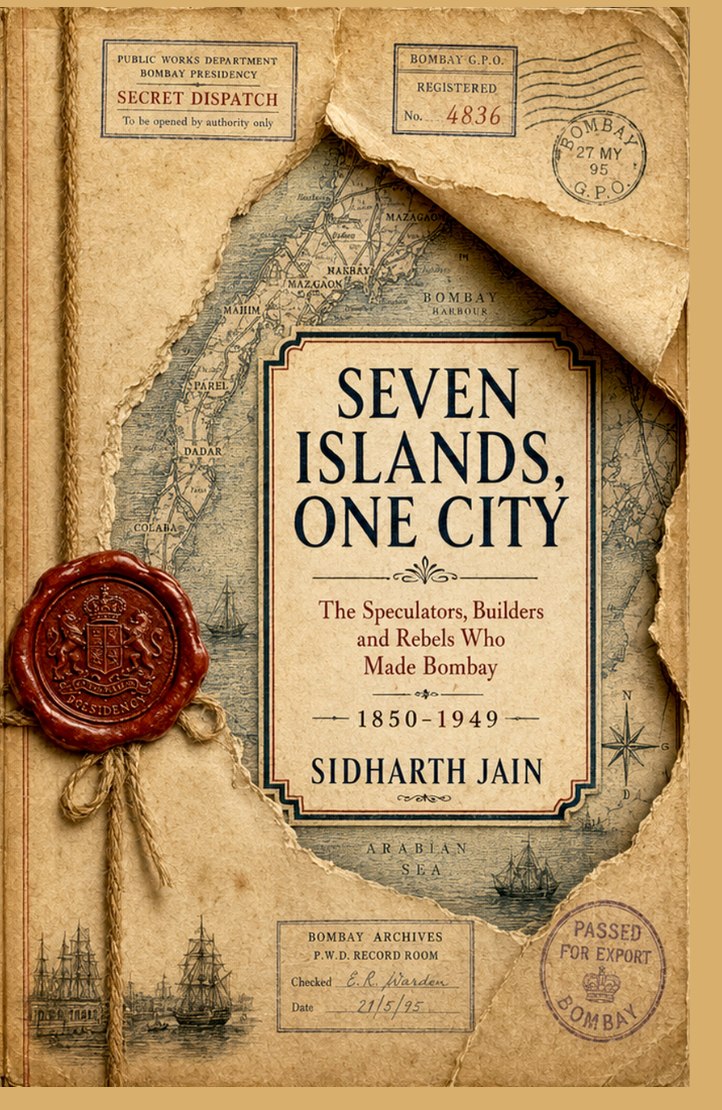
A narrative history and love letter to old Bombay — how seven low-lying, malarial islands became a commercial and cultural metropolis through reclamation, shipping, cotton, speculation, railways, migration, law, architecture, civic institutions and finally cinema. Not the achievement of a single founder, but the cumulative work of many — while keeping sight of the communities displaced as the city grew.
- Bombay was constructed rather than founded: problem by problem, causeway by causeway, boom by crash.
- Infrastructure changed not only geography but identity, migration and the scale of commerce.
- Cinema completes the civic story by giving very different Bombayites a shared mythology of the city.
The five books at a glance
| Title | Subject | Readership |
|---|---|---|
| Boring Companies Die First 2nd Edition · 38 Case Studies |
Cinema's storytelling tools applied to founders, brands, fundraising and leadership. | Founders · CMOs · Investors |
| Surviving Bollywood 15 Survival Rules |
The unglamorous disciplines behind a long career in the Indian film business. | Writers · Directors · Producers |
| Your Book Isn't a Movie Yet S.T.O.R.Y. Test |
How the screen business actually evaluates books, and how authors get ready. | Authors · Agents · Publishers |
| Cinema & Side Effects 10 Episodes |
Cinema as emotional education, and the behavioural residue films leave behind. | Film & pop-culture readers |
| Seven Islands, One City Bombay, 1850–1949 |
How seven islands were reclaimed, financed and mythologised into a metropolis. | History · Architecture · Bombay |
Press release
Sidharth Jain marks 25 years of storytelling with a five-book collection
Producer behind Trial by Fire and Ragini MMS turns a 25-year career across cinema, streaming, development and book-to-screen into five books.
MUMBAI, 2026 — Producer, entrepreneur and author Sidharth Jain is celebrating twenty-five years in the film and storytelling business with a five-book collection spanning business, Bollywood, book-to-screen adaptation, cinema and the history of Bombay.
The collection brings together Boring Companies Die First, Surviving Bollywood, Your Book Isn't a Movie Yet, Cinema & Side Effects and Seven Islands, One City. Different shelves, Jain says, but one continuing subject: what stories actually do.
Across twenty-five years, Jain has developed more than 150 stories and 50+ screenplays, worked with 100+ screenwriters and 300+ authors, and represented more than 500 books for screen adaptation. His producing credits include Marigold (2007), Ragini MMS (2011) and Netflix's Trial by Fire (2023), winner of the Filmfare OTT Award for Best Series — Critics. He was part of Hotstar's early team and founded The Story Ink in 2018.
"For twenty-five years, almost every job I have had has involved somebody walking into a room with a story. Sometimes a screenwriter with ten pages. Sometimes an author with a 400-page novel. Sometimes a founder with a company. I realised I had been studying the same thing all along: why some stories make people care, and why others disappear."
Boring Companies Die First applies cinema's storytelling tools to brands, founders and leadership. Surviving Bollywood distils the less glamorous disciplines behind a durable creative career. Your Book Isn't a Movie Yet explains why literary quality and screen adaptability are different things. Cinema & Side Effects asks how movies become emotional education. Seven Islands, One City traces how Bombay was engineered, financed, populated and finally mythologised at the movies.
"At twenty-five, I thought storytelling meant making films. At fifty, I think it is much larger than that. Companies run on stories. Careers run on stories. Cities eventually turn themselves into stories."
The five books are published in 2026 by White Falcon Publishing.
High-resolution cover art for all five books, author headshots and additional excerpts are available on request. We're happy to tailor quotes, data points or a custom excerpt to your story.
Download the press kit (PDF)